
A Conversation with Pitt Undergraduate Student Kornelia Gondek
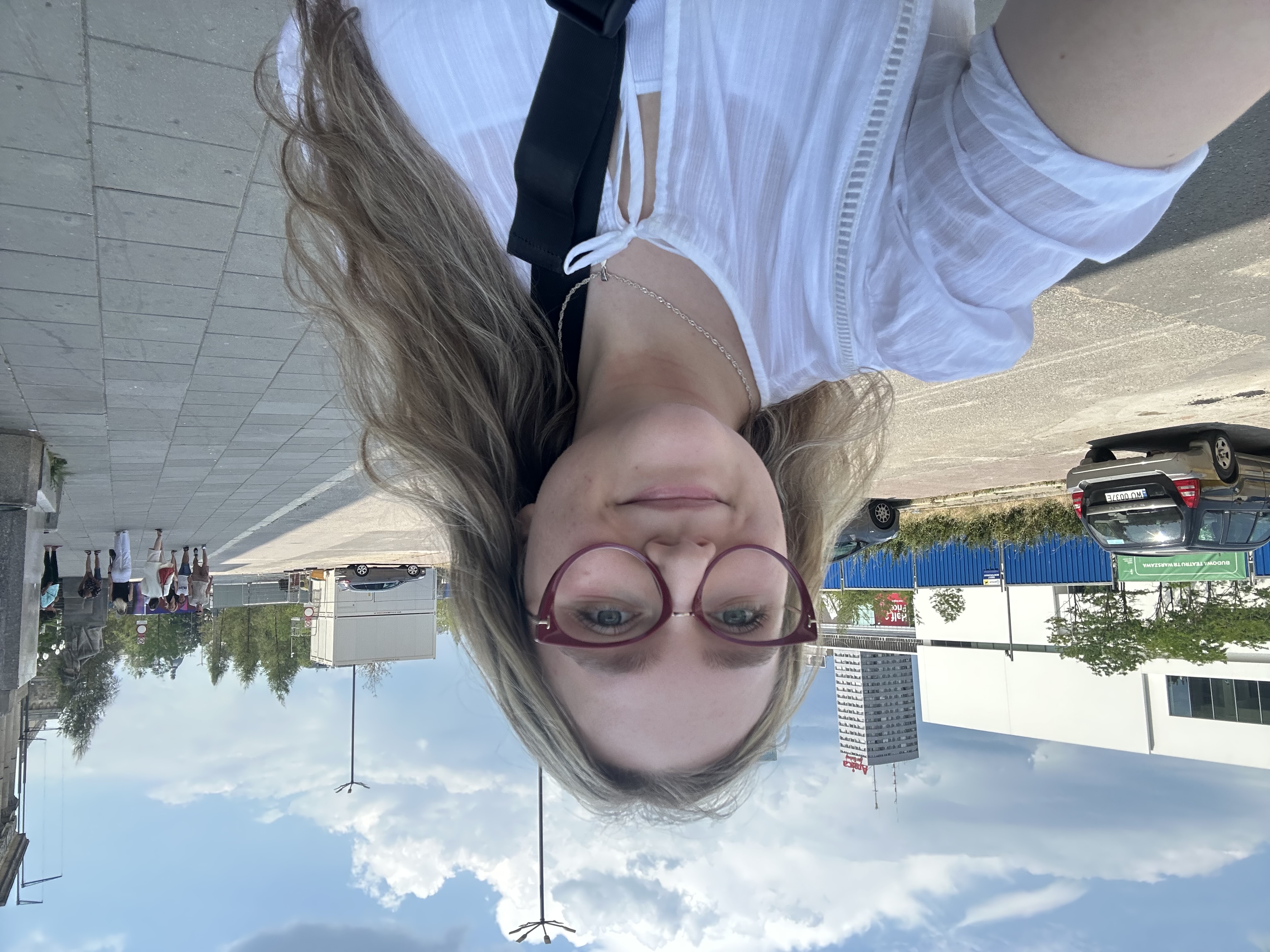
Kornelia is a third-year, double major in Art History and Museum Studies, with a certificate in Russian, Eastern European, and Eurasian Studies. Kornelia also takes a few Geology classes for fun!
Q: How did you get involved with Pitt Stages’ production of The Trees as a Polish tutor?
I had initially gotten involved because the Director of The Trees, Natasha Cole, reached out through email last semester to inquire whether I would like to help out with the play, as three characters had speaking lines in Polish. It turns out I was referred by people within the Polish Studies program. I was glad to help and decided to reply and agree to help out throughout the Spring semester leading up to the play. We met once a week, usually on Tuesdays, and I would help the actors go over their lines, improve their intonation, and go over proper pronunciation and movements.
Q: What was a challenge you experienced while taking on this opportunity?
I went into this project not knowing what to expect. Polish is a hard language to grasp in just a few weeks' time, and I knew beforehand that actors would have a hard time placing certain sounds within their mouths that the English language just doesn't require. I had previous theater experience, but I had never tutored someone in a foreign language. I remember that on the first day I had to go over some of the Polish alphabet so that we could go over sounds and how individual letters should each sound. I could see how dedicated everyone was so that appeased my anxiety a bit. Over the weeks we worked together going over lines one at a time and I became more nitpicky with their pronunciation and intonation. The Polish language is quite melodic, so the intonation of phrases is important at times to discern context and mood. The actors did a good job with this. They were so keen to learn and ask questions that it made me really think about the accuracy of translations, origins of words, and the conjugations we were finding throughout the script.
Q: You mentioned the difficulty of some of the sounds of the Polish language for English speakers, could you give a show line as an example of a time when you had to help the actors adjust to the pronunciation?
When going over lines, something everyone had to work on was definitely rolling their Rs and pronouncing words that started with "przy" which I recognize is a hard sound for English speakers to make due to tongue placement and how certain letters sound together. Rs need to be rolled or flipped to pronounce certain words correctly. Lines like "Babciu, chcialabys trochę grzanego wina?" were initially written like this without accents and the right letters making it harder to understand and pronounce. On top of that, the Rs that needed to be flipped or rolled in the words were hard to say. After thinking through this, I was able to adjust the pronunciation based on the fact that Sheila's character is a not a native speaker. That allowed Tracey, who played Sheila, to soften her Rs in this line and also in worlds starting with "przy." I used my friends who grew up as heritage speakers as references for this. Some of us make the effort to adapt a Polish accent while others don't, so it was based off that. Both the actors Yide and Tracey did amazing jobs. I found it fascinating how they both had their own process for writing down pronunciations. Tracey wrote in English and broke down the words to make sense. Yide wrote out her notes and pronunciations using Mandarin characters, which was so fascinating to see.
Q: What is your involvement with the Slavic Languages & Literature Department?
I have a lot of interactions with Marcin Dadan who is the Director of the Polish Studies Program at Pitt, and Ryan Gartland who is my advisor for my certificate program at the Center for Russian, Eastern European, and Eurasian Studies. I got in contact with the both of them through the Pitt Polish Club, whose E-Board I serve on. I have also taken Polish language classes my freshman year at Pitt, which was supposed to be an easy elective for me but ended up being challenging in its own way, as I hadn't taken a formal Polish Language class since the third grade. I am a heritage speaker- my parents are both from Poland and made sure to speak and informally teach me and my brother the language. I had to unlearn certain parts that I was taught that were informal or too casual to address strangers with, or regional slang from my mom's village. The classes were so informative and helpful in getting me to the point that I am currently at with my language studies. I was also able to go and study Polish in Poland over the summer through a program professors connected me with. Through that program I was able to earn a certificate for Polish language.
Q: Why do you think it is worthwhile for students to connect with or learn new languages in college or any time in life?
I think that everyone at Pitt needs to be able to engage with and take foreign language classes. They really strengthen your own understanding of how languages work, as well as improve your own problem-solving skills. It also makes it easier to learn more languages and expands your possibilities in research and studies if you can read and comprehend resources and academic papers in their language of origin.
Q: How did you feel when all was said and done?
Overall, I had such a great time and enjoyed tutoring the student actors. When I saw the production, I could see how the hard work everyone put in paid off. It was wonderful.